July Reading Notes

Hello, reader…

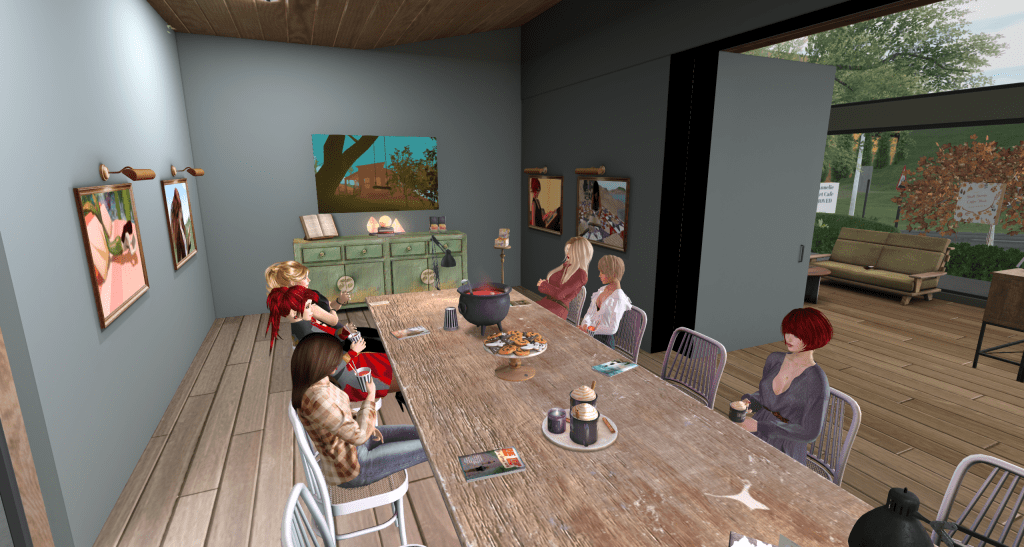
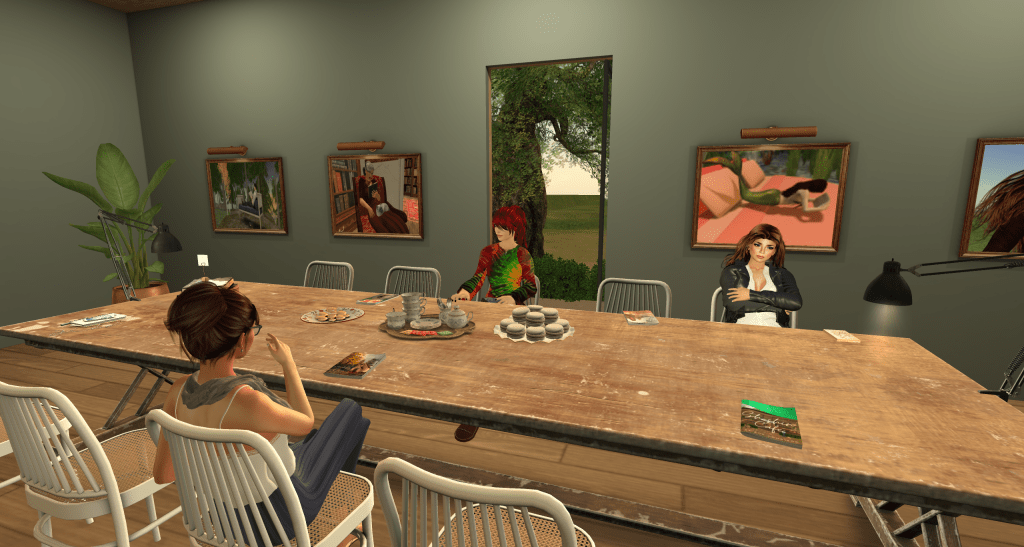
It’s been a busy summer but I’m so happy we were able to squeeze in a gathering for July. As always, many intriguing titles were shared…I hope you find something among them to pique your interest.

A History of the Soviet Union: From the Beginning to Its Legacy, 3rd Edition by Peter Kenez

Sierra is partway through this one and commented that it’s pretty readable and fairly concise. She observed that one of the trade-offs in any history book is what the author chooses to focus on – which details to include and when to provide a mere overview. Here, for example, there is more treatment of the Bolsheviks as a group with a bit more color around Lenin while not necessarily getting into a great deal of detail. Overall, Sierra is enjoying this book.

Armageddon Averted: The Soviet Collapse, 1970-2000 by Stephen Kotkin

Along with the Kenez book, Sierra is also reading this more focused history and noted that it’s interesting to read a history about a period of time that she lived through (though not living in Russia). The Kotkin book is very readable and enjoyable.

The Autobiography of Mrs. Tom Thumb by Melanie Benjamin

FireWoman read this historical fiction about a woman who was born at average weight and length, but stopped growing when she was really young. She was not a dwarf, but a diminutive-sized person. Her younger sister was born the same. All other siblings were normal sized. This is the same thing for the real Tom Thumb who was with Barnum Circus. It is her story and what a story it is. Firewoman really enjoyed this read – she couldn’t put it down! – though it was sad in parts.

The Wind Knows My Name by Isabel Allende

With a renewed desire to read more Allende, Firewoman picked up this story of a young Austrian boy who survives Kristallnacht and sent to London with other Jewish children to be safe from the oncoming war. The other side of the story is a young girl in El Salvador during contemporary times who is escaping the murder and crime in her country to come to the United States.

The Little Prince by Antoine de Saint-Exupery

FireWoman initially borrowed this in eBook format from her local library and found the translation to be horrible. So she looked for a different translation and enjoyed it very much.

The Electricity of Every Living Thing: A Woman’s Walk in the Wild to Find her Way Home by Katherine May

Zoe read this book about a woman who walks the South West Coast Path in England to spend time with herself and try to make sense of her behavior. Along the way, she listens to a radio programme and a lightbulb goes on in her head….that she’s autistic. So the book is about her walk and about her journey to confirm that she’s autistic…and what to do with that diagnosis and her new vocabulary. Zoe enjoyed the self-discovery bits but found the descriptions of the actual walk to be rather boring.


The date for our August gathering is TBD….but coming soon!
June Reading Notes

Hello, reader…

I forgot to take a picture of our gathering but it was lovely! Each book shared went directly on to my reading list – I think you’ll find them intriguing, too.

Zelda Fitzgerald: Her Voice in Paradise by Sally Cline

FireWoman didn’t know anything about Zelda Sayre Fitzgerald before reading this book. Author and researcher Sally Cline did justice for Zelda in this book with her in-depth research beyond what has been written by previous biographers of Zelda’s life. Cline made pointed comments where she found differences in previous books about Zelda. Cline also goes into great detail with Zelda’s pursuits into writing, paintings, and ballet.

FireWoman cautions that the eBook via Hoopla is rife with missing punctuation, mostly absent periods, and misspellings – all of which made the book difficult to read. But aside from that, it was an excellent read.

Desert Solitaire by Edward Abbey

A riveting capsule of time in the great outdoors with political commentary from the author. Abbey was a seasonal park ranger in Utah’s Arches National Monument at the time. An adventurer, he went down the Colorado River without a map or life preservers! FireWoman thought it was an exciting read of a history of a time and place.

The Invisible Life of Addie LaRue by V.E. Schwab

A second readthrough for Alas, she shared that she enjoyed all the little insights as the character went along. Lots of pithy comments and observations. She also felt that the author seemed to change direction toward the end, which made for an unsatisfying ending. She’s curious to hear what others think about the ending!

An Attempt at Exhausting a Place in Paris by George Perec

This is a book that was referenced in a memoir that Sierra read last month called, ‘No. 91/92: A Diary of Year on the Bus‘ by Laren Elkin. Perec situated himself in a particular part of Paris for a few days and basically wrote down what he saw….busses that pass by…people that pass by…signage…birds, etc. It’s a kind of snapshot of a day and place in October 1974.

Sierra mentioned that it can be helpful to have the translator’s notes to help provide additional context about Perec…who was a very unusual writer. He wrote another book without the letter ‘E’ apparently!

Perec’s book is free to read here.

Sensitive: The Hidden Power of the Highly Sensitive Person in a Loud, Fast, Too Much World by Jenn Granneman and Andre Solo

This is a recently published book by a married couple who identify as highly sensitive people or HSP. Zoe thought it was an easy read – clearly written for the masses – that attempts to define and offer guidance to HSPs. Recommended for readers who are fairly new to the topic.

The Way Through the Woods: On Mushrooming and Mourning by Long Litt Woon

Zoe is halfway through this memoir about a woman’s journey through her grief of the loss of her husband by studying mycology and becoming a mushroom inspector. Zoe loved Woon’s writing style – which feels like sitting over the kitchen table with a really smart, nerdy friend.


Our next gathering will be on Sunday, July 9th at 1pm SLT. Hope to see you then!

May Reading Notes

Hello, reader…

Our May gathering was cozy yet bubbling with conversation. Several intriguing titles were shared – hopefully these will pique your interest.

A Snake Falls to Earth by Darcie Little Badger

This is a young adult novel by a geoscientist, writer, and fan of the weird, haunting and beautiful.

It’s about the connection between a young Lipan girl, Nina, and a boy, Oli, who lives in a parallel world, in “the land of spirits and monsters”. Though they’ve never met, there are forces working to ensure they never will.

FireWoman thought it was a fantastic read. Nina’s world is facing the same problems of vanishing ecosystems as we are today. What happens in Nina’s world affects Oli’s world.

Elatsoe by Darcie Little Badger

FireWoman also read Badger’s debut novel. It’s about another Lipan Apache girl, Elatsoe, whose cousin is murdered. In a world of magic and monsters, Elatsoe relies on her inherent gifts to uncover the mystery behind this crime.

FireWoman learned about this author through an interview on National Public Radio. If you also enjoy young adult novels, storytelling and magic, you’ll enjoy this author, too.

My Invented Country: A Nostalgic Journey Through Chile by Isabel Allende

A memoir by a well-known author who responds to the question: from where does she draw her nostalgia?

FireWoman commented that Allende writes like she is in the same room with you, just visiting among friends.

The Cockroach by Ian McEwan

Except where the character of Gregor Sansa wakes up to find that he has changed into a giant cockroach, McEwan’s protagonist is a roach that wakes up in the body of a man. But not just any man!  Our protagonist wakes up in the body of the Prime Minister of Great Britain.  He isn’t alone either — and is on a mission. 

Ultimately this is a satire on Brexit and some of the characteristics of politics in the UK — and to a lesser extent — the US. 

Sierra thought it was a fun read overall.

No. 91/92: A Diary of a Year on the Bus by Lauren Elkin

Sierra also read this short set of journal entries that Elkin made while taking the bus in Paris to and from the school. Elkin was a teacher there from 2014 to 2015. Her entries were written as a set of short notes that she made on her iPhone.

Sierra felt this one was maybe hit or miss — she can see that it would have been tricky to write much on a phone on a bus which at times seems like it would have been crowded.

The most interesting bit was the last entry .. which no doubt was developed further and not just while sitting on a bus.

Elkin mentions George Perec’s ‘An Attempt at Exhausting a Place in Paris’ (1974). It’s a memoir that reflects on a time when Perec sat for three days in the same place and wrote down everything that he saw. Sierra thought perhaps Perec’s book inspired Elkin’s experiment.

The Words in My Hands by Asphyxia

Asphyxia is a Deaf Australian writer (her perspective on Deafness is that it’s its own culture, hence the capilization).

This fictional memoir is written in diary form. The pages are decorated in a kind of art journal style. It’s fiction, set in the near future, where the environment is wrecked and food is scarce. The protagonist is a Deaf teen who – long story short – ends up learning to garden and cook while most of the world is reliant on bioengineered “food”. There’s a love story…and a lot about community building.

Zoe thought it was a good read.

How Romantics and Victorians Organize Information by Jillian M. Hess

Zoe just started on this non-fiction book about commonplace books and scrapbooks and how they were kept in the 19th century. Though she’s only a chapter in, she recommends it.


Our next gathering will be on Sunday, June 11th at 1pm SLT. Hope to see you then!

March Reading Notes

Hello, reader…

Happy spring!

I have some wonderful titles to share with you, compliments of the Reading Room bookworms…

The Folded Clock: A Diary by Heidi Julavits

The title of this book comes from a mixed up conversation that the author had with her daughter who thought that the author said “folded clock” instead of “folded cloths”.

The author remembers writing in a diary every day for several years as a child. She pretends to write a diary now, but it is not her daily happenings, but a daily memory of something.

She writes about old friends, dinner parties, a writers convention in Germany, and a writers conference in Italy. And it’s mostly things that annoyed her!

One thing in the book made the reader, Veyot, go off on a tangent – the author tells how her last name, Julavits, causes people to guess that she might be Jewish, but she is not as far as she knows. Strangers write letters insisting that she is their relative, misspelled. Jolowitz, or even Jewelvitz.

Though Veyot enjoyed the book she doesn’t recommend it for everyone. If you don’t mind an author who is often annoyed, then this might be a good read for you.

Let Me Tell You What I Mean by Joan Didion

This is a collection of both shorter and longer articles that span 1968-2000. Sierra commented that there is an aspect of…maybe…ethnographer in her work. Didion tends to be a good observer of her place, writing about details of some place but also not getting bogged down either.

To echo Veyot’s comment about The Folded Clock, there are times where Sierra thought that parts of Didion’s work reflects annoyance at certain things. But it comes off well and Sierra didn’t think it would put anyone off.

Sierra also found that there is a lot in Didion’s articles that read as auto-biographical .. what Didion thinks of her own development as a writer is interesting.. what she thinks of as her limitations…for instance she doesn’t think she could be an academic .. that she didn’t have access to the ‘world of ideas’. There is maybe something in that which gives her writing a very grounded-in-reality feel.

Sierra has another book of Didion’s that she wants to get into…South and West, which is from some notebooks she kept on a trip once.

Four Hundred Souls: A Community History of Africa America, 1619-2019 by Ibram X. Kendi

90 writers contributed essays and poetry to this 2020 book. Kendi has written the book “How to be an Anti-racist”, “How to raise an antiracist”, and “How to be a young anti-racist”. The book spans 400 years in five year increments.

FireWoman discovered this book via LinkedIn and was glad she did.

Toussaint Louverture by Charles Forsdick

Toussaint Louverture was the founding father of Haiti and the leader of the first successful black slave rebellion in the Caribbean. According to Callista, the book is very factual, short, and concise – but not well-organized. She found the story of Louverture tragic but also complex. An interesting history perhaps pursued via a different author.

The Hole by Hiroko Oyamada

Zoe found this Japanese novel entertaining but befuddling. She’d shelve it under magical realism. It’s about a woman who moves with her husband to his hometown and the strange (possibly imaginary?) people she meets there.

All the Beauty in the World: The Metropolitan Museum of Art and Me by Patrick Bringley

This is a quiet, gentle memoir by a former writer for the New Yorker who spent 10 years as a guard at the Metropolitan Museum of Art. Zoe recommends it for when you’re in a quiet mood. It was a pleasant read.

A short list of these books may be found here.


Our next gathering will be on Sunday, April 9th at 1pm SLT. Hope to see you then!

February Reading Notes

Hello, reader…

Exciting news – we received a poem in our poetry mailbox! It’s a haiku authored by Blink Hexem.

Here it is…

Light gathers in spring,

Sunlit shafts pierce the forest,

Moss grows on old bone.

Isn’t it lovely?

Here are the books shared during our February gathering…

The Spare Man by Mary Robinette Kowal

This is a kind of classic murder mystery like you might have in the 20s and 30s – but set in some future time aboard a ship traveling from the Moon to Mars. The protagonist is a wealthy industrialist woman — recently married and on her honeymoon — when a murder happens, implicating her husband.

Sierra is still making her way through this one and commented that so far it’s a bit hit and miss. Somehow she’s not connecting with the protagonist…and it is like the author has set up all these links about her but hasn’t really connected them. She found the accused husband more interesting but the story isn’t told from his viewpoint.

Also – the story maybe has the best descriptions of a small white terrier service dog. 🙂

The Philosophy of Modern Song by Bob Dylan

Veyot read about this on a book blog, which described it as a coffee table book. It’s pretty, has lots of photos, and is very skimmable. Though she didn’t know many of the singers discussed, she liked the style of writing. Dylan often digressed to something else about each song or singer…and talked about rhyming schemes.

Shadows on the Rock by Willa Cather

FireWoman read both this one and another Cather book – both were seemingly well-researched historical fiction using easy flowing narrative with personable characters.

The Wind Done Gone by Alice Randall

An unauthorized parody of Margaret Mitchell’s Gone with the Wind, written from a slave’s perspective.

Folk Tales of Japan: 28 Folk Tales with Cultural Commentary by Kyota Ko

FireWoman read this collection by an author she follows on LinkedIn, where he offers Japanese culture and history notes daily. His tellings are contemporary and the history of the times is very in depth.

Other Birds by Sarah Addison Allen

Zoe said she’d shelve this one under magical realism. It’s about a young woman who goes to live on an island mostly unfamiliar to her, where her mother left her a condo. In this very small condo complex are an interesting cast of characters, each haunted – mostly lovingly – by someone from their past. The stories behind these hauntings are the main focus of this book and the big themes are processing grief and letting go. And also, celebrating ones uniqueness.

Zoe thought it was a little cheesy and predictable but an otherwise enjoyable read.

Old Age: A Beginner’s Guide by Michael Kinsley

A kind of memoir/collection of essays about aging and living with Parkinson’s. Zoe found parts of it interesting but also skimmed some parts.

A short list of these books may be found here.


Our next gathering will be on Sunday, March 12th at 1pm SLT. Hope to see you then!

January Reading Notes

Hello, reader…

Happy New Year, bookworms!

Looking for a few good reads to add to your towering TBR pile? You might find them here…

There There by Tommy Orange

Marly shared this bestselling novel of twelve Native American characters who converge at a large annual powwow event and explores their interconnection and individual journeys.

Problems with People by David Guterson

Veyot read this short story book twice while she was snowbound and enjoyed it both times.

Dumb, Dumb, Dumb by Mary Jo Pehl

A funny memoir about Pehl’s mother, also read by Veyot. When the author cleans out her mother’s house, she finds – to her surprise – 400 book reviews on index cards. Her mother read widely – from romance novels to philosophy to world affairs. The word most often used in her reviews gives this book its title.

A Christmas Courtship by Shelley Shepard Gray

A simple story of two romances, set in an Amish community during the Christmas holiday season. The courtships were sweet and involved a kind librarian and her bookmobile. Zoe really enjoyed this quick and easy read.

The Death of Vishnu, The Age of Shiva and The Age of Devi by Manil Suri

Suri is a mathematician who wrote a planned series of three novels that, while not serial, represent a kind of trinity in Hinduism.

Bernice read the first several years ago when it first came out. The second, The Age of Shiva, is about a young woman who tries to escape her domineering father by marrying a man he disapproves of. It doesn’t go well. After her husband dies, she becomes wrapped up in her son, her only child.

The Age of Devi is an apocalyptic story, set in a slightly futuristic India, where hostilities between Hindus and Muslims have reached a fever pitch. The story is about a young man, who is a physicist, his wife, and his male lover. Though Bernice found this to be an interesting story, she wasn’t sure how she felt about the ending.

Bernice said all three were interesting reads and she learned quite a bit about Indian culture from them.

Queen Lucia by E.F. Benson

A super witty hilarious story about a community in England – middle class, pretentious, artistic – and the various social leaders competing with each other….starting with one of them complacently wandering around the village feeling important and then realizing that her rival has snagged a real eastern Indian “guru” who has all the village ladies in the backyard doing yoga and breath exercises, etc. Scout found it all very silly and fun.

The Long Dark Tea-time of the Soul, a Dirk Gently #2 book by Douglas Adams

Written by the author of the Hitchhiker’s Guide to the Galaxy, this is a quirky book that takes places in a day or two in time and is a stream of consciousness in crazy British thought patterns. Recommended by FireWoman.

Firekeeper’s Daughter by Angeline Boulley

A book that has been on FireWoman’s radar for a while, here is a quote that she found profound, “Wisdom is not bestowed. In its raw state, it is the hearbreak of knowing things you wish you didn’t.”

This is the author’s first book and it has been a #1 best seller. The author is an American Indian and has set this book in the Upper Peninsula of Michigan. It’s a tale of mystery and self-discovery.

E.F. Benson’s ghost stories

Note from Zoe: A specific story/collection wasn’t mentioned though there are collections available to read for free online.

Kal mentioned Benson’s ghost stories after hearing Scout talk about his Queen Lucia novel. He commented that they’re great, in a MR James, supernatural fireside sort of way.

Heatwave by Victor Jestin

A French novel that has won quite a few awards there recently and isn’t quite as dark as its premise suggests. It’s about a campsite where a teenage boy sees his friend being strangled to death by the ropes on some swings in a playground – we never find out whether it’s through suicide or misadventure – and our main character does nothing to stop it. Then impulsively hides the body on the beach.

Kal felt it was more of a coming of age tale/social satire than dark. He likened it to Camus’ The Stranger or any of JG Ballard’s novels on gated middle class communities. It’s about the artificial enforced fun on places like holiday camps and our relationships in those sort of places. Though he’s unsure if he would 100% recommend it, it’s definitely an interesting book.

A short list of these books may be found here.


Our next gathering will be on Sunday, February 12th at 1pm SLT. Hope to see you then!

November Reading Notes

Hello, reader…

It’s hard to believe that this was our last gathering for 2022!

Here are a few wonderful selections to add to your holiday reading pile…

The Dictionary of Lost Words by Pip Williams

A historical fiction novel centered around the beginnings of the Oxford English Dictionary. It tells the story of a precocious young girl who grows up to become a significant contributor to the OED. In secret, she also spends her life squirreling away discarded words – words precious to women’s experiences (as well as other marginalized groups) and assembles her own reference tome.

Zoe commented that it was well written and highly recommended.

The Book Eaters by Sunyi Dean

This dark fantasy novel tells the tale of earthbound aliens who look like humans but eat books, not food, for sustenance. An unfortunate condition exists among a portion of the alien population that necessitates a few to feed on minds instead of books…as is the case with the main protagonist’s son. Her search for a cure for her son is the main plot of the novel, with many interesting subplots woven in.

Zoe thought it was an interesting read. She noted that the author’s book diet was easy to discern – classics, fairytales, a sapphic vampire novel published prior to Stoker’s Dracula – which inspired more good reads for Zoe’s TBR pile.

The First New Testament by Jason D. BeDuhn

An English translation of a reconstructed text assembled from excerpts that heresiologists included in their works against heretics and their writings.

One such heretic, Marcion, essentially put together the first version of the New Testament, which appears to have included Paul’s pastoral letters and a version of proto-Luke.

Stella commented that it is a fascinating history for folks nerdy about religious studies…though other readers might find it “super dry”.

The Wise Men of Schilda

Pieced together by its reader, Serena, from across the internet, the premise of this story focuses on men of a town who were renowned for being wise.

Kings and rulers from around the world would hire them for their wisdom and advice. Unfortunately, they allowed their town to fail since they were not home. Their wives threatened them if they did not return. They returned but kept getting offered jobs. They decided that to stop being bothered, they should act foolishly.

Smaller stories of the odd things the town folk did are also included.

*An English language edition of a title by the same name, authored by Otfried Preussler, is available from the Internet Archive here. An Internet Archive account is needed for access; this title is available to borrow by the hour and renewable every hour pending availability.

Going on a Dig by Velma Ford Morrison

Juvenile non-fiction that presents an overview of archeology. FireWoman enjoyed the way this topic was presented to its readers.

The Name of the Rose by Umberto Eco

A mystery that has a lot of church history and some philosophy. Josiane noted that it was complicated in detail but beautifully written in many parts. Mieke agreed that it’s a great read.

The Hunter by John R. Erickson and The Cow-tail Switch and other West African Stories by Harold Courlander

The Hunter is a western set in Texas whose author also wrote the popular Hank the Cowdog series.

FireWoman read both and plans to keep them for her collection

Exit by Belinda Bauer

A darkly humorous crime novel about a pair of “exiteers” who assist people who want to die.

The older one, Felix, and a new young woman went to a house to carry out their duty, which involves sitting with the person who is ill and wishes to end it all. Unfortunately, on this occasion, they got the wrong person. The story follows from there.

Mieke found this book to be somewhat amusing and a light read in spite of the subject.

A Nice Cup of Tea and Sit down by Stuart Payne

Mieke really recommends this for a relaxed read. It’s mostly about the many, many biscuits that go with a cup of tea…it’s quite amusing!

Rules for Visiting by Jessica Francis Kane

Veyot prefaced this with a lovely idea to choose books off the endcap where staff members pick novels with similar covers. On a particular day, a staff member chose books with plants on the covers.

In Rules for Visiting, a landscaper tells about her work, sort of like a memoir but a novel, and then she goes to visit some old friends and tells about that, too. Veyot found it to be a nice, peaceful read.

Prep by Curtis Sittenfeld and The Music of Chance by Paul Auster

Kal recommends the Auster novel, about a guy who is lost, figuratively and literally. He spends his days driving across America, his money running low. He meets a promising young poker player who is about to go into the game of a lifetime. The player needs financial backing so they form a partnership…then the book focuses on the game and the rather unique way that debts accrued during the game are paid off.

Kal thought the book was like an American Kafka…everything feels off, but people just carry on like things are normal.

Nature Doctors: Pioneers in Naturopathic Medicine by Friedhelm Kirchfeld

A book that Scout credits with return to SL, Nature Doctors is a textbook for her studies on natural medicine, nutrition and herbalism.

It’s about the dawn of hydrotherapy in 1800s Germany and all the various competitive nature-based hydrotherapists, sun bathers and nudist philosophers in medicine.


A short list of these books may be found here.


Our next gathering will be on Sunday, January 8th at 1pm SLT. ‘Til then, happy holidays and take good care.

October Reading Notes

Hello, reader…

It was lovely to welcome a few new faces this week! It seems that WSJ’s current 4-part special podcast series on the Metaverse and Second Life has inspired folks to log in again after extended absences – yay! Hope to see more new and old friends in the near future.

Meanwhile, here’s a few interesting reads to add to your TBR pile…

Recollection Creek and Hound Dog Man by Fred Gipson

Our friend Firewoman started us off with these youth fiction novels set in the Texas Hill Country.

Cotton, the young protagonist in Hound Dog Man, has always wanted a hunting hound of his own but his Ma won’t let him have one. He and his friends go out hunting raccoons with a seasoned hunter. Adventure ensues while they are out hunting in the wild – some of it scary. Cotton does get a dog in the end.

Fred Gipson is also the author of the very popular young adult classic, Old Yeller, which is celebrated annually in his hometown of Mason, Texas. The local library has his writing desk and space for some of his things.

Cry, the Beloved Country by Alan Paton

Highly recommended to FireWoman by her mother, this historical fiction novel is set in South Africa, after World War II. It describes the domination of the native Black population by the White population and what comes from oppression. Of the books that she’s read recently, this is the one that has stayed with her. She found it to be a lyrical work set within the hardships of all the people, and the goodness and kindness of the people.

Prisoner of Tehran: A Memoir by Marina Nemat

Published in 2007, this true story is about a 16 year old girl who was arrested for no particular reason, badly beaten, then taking to a firing squad. A guard took pity on her and managed to get her sentence changed to life imprisonment. Desiring to take her as his wife, he threatened her family if she refused. In the end, the guard’s family was instrumental in gettiner her out of the country, to Canada.

Though it is a depressing read in places, Mieke highly recommends it. She felt it was worth reading to get some feel for what it’s really like there for women.

Diary of a Void by Emi Yogi

Set in modern day Tokyo, this 2022 novel is about a woman named Shibata. She is the only woman in her department at a paper core making company. In addition to her normal duties, she tends to get stuck with doing all the menial office “chores” – e.g. serve tea, distribute the mail, clean up the break room, etc.

One day, she decides that she’s fed up. So she tells everyone she’s pregnant…even though she’s not. What follows is a journey of how one woman carves out a method of self-care in a typically indifferent environment.

Recommended by Zoe for readers who enjoyed Sayaka Murata’s, Convenience Store Woman.

How to be Eaten by Maria Adelmann

Published in 2022, this is a modern retelling of a handful of classic fairytales.

Five women are invited to a kind of narrative group therapy. They turn out to be Bluebeard’s former girlfriend, Red Riding Hood, Gretel, a Princess, and the Miller’s daughter. All the women are adults reflecting on their stories as if recovering from major trauma and, eventually, lean on each other to heal.

Zoe found it darkly humorous and entertaining.


A short list of these books may be found here.


Our next gathering (and last gathering for 2022) will be on Sunday, November 13th at 1pm SLT. All are welcome – bring a friend!

September reads

Hello, reader…

First, a few exciting announcements!

We have two new additions to our Reading Room collection.

In the book lovers lounge beneath our dear Veyot’s portrait is a copper pedestal. On it, is a small orange box (original art by Veyot!) and in it is an original poem authored by Veyot. Be sure to check it out!

Between the two sofas in the main reading room is a new publication called The Joy of Farming by Soull Starlight. Whether you’re a gardening neophyte or a well-seasoned farmer, everyone is sure to enjoy this very readable and useful guide.

The Memory Police by Yoko Ogawa

A novel that Bernice found disturbing and sad.

The Locked Room by Elly Griffiths

The penultimate novel in a series, which makes Bernice sad.

The Hunt by Faye Kellerman

The last book in Kellerman’s Decker/Lazarus series…which also makes Bernice sad (it was a theme today!).

The Man Who Died Twice by Richard Osman

Not the last book in this series, which Bernice was really happy about!

Empress Dowager Cixi: The Concubine Who Launched Modern China by Jung Chang

A New York Times notable book about the Empress Dowager Cixi who started out as a concubine and ended up ruling China from behind the scenes. Mieke is part way through it and said it’s fascinating!

How Civil Wars Start: And How to Stop Them by Barbara F. Walter

The book reviews examples of different civil wars over the past century to highlight how in quasi-democratic states (anocracy) similar patterns of factionalization and political disfranchisement often lead to civil wars breaking out.

Sierra found this book very readable and, given the topic, pretty concise – but there are extensive notes and references in the back.

She liked this very readable book because it tied together some conceptual ideas into different historical events. She also picked up some key details about several conflicts that she was previously unaware of. Some of the conflicts are familiar ones–the civil war in Syria, the sectarian conflicts in Iraq post-Saddam…but it also goes back to some earlier conflicts…Northern Ireland’s ‘Troubles’…ethnic conflicts in the Philippines.

The author, Walter, is an adjunct faculty at the UC San Diego Political Science Department and also is in the Graduate School of International Relations and Pacific Studies.  She’s been studying this for 30 years.

The Swimmers by Julie Otsuka

Fleming read this novel about compulsive swimmers, people meeting every day at a pool. The last part deals with the onset of dementia of one of the swimmers. It has a very peculiar structure, according to Fleming, who loved it and said it’s funny and very moving.

Hurricane Season by Fernanda Melchor

Fleming also read this novel, which he described as a very, very tough read – not easy to stomach. It’s about a small godforsaken village in Mexico and the climate of violence and hopelessness and suppression of women. A stunning book but very graphic. The author is a fantastic stylist, with very virtuosic writing that sucks the reader in.

Seeking Fortune Elsewhere by Sindya Bhanoo

This is a collection of South Indian women-centered short stories that explore moments of transition for each.

The Goldfinch by Donna Tartt

Veyot read this novel-written-like-a-memoir about a boy and his mother who are caught in a terrorist bomb attack at MoMA. The boy steals a picture that his mom is looking at – called The Goldfinch. Eventually the painting is returned…and the novel is about what happens along the way.

The Cellist of Sarajevo by Stephen Galloway

A favorite reread of Tallulah’s, this novel is about 3 people’s separate lives in war-torn Serajevo. A cellist witnesses the death of two dozen people. He sits where they died and plays Albinoni’s Adagio once a day for each of them. It’s very hard hitting but also poignant – especially so with the war in Ukraine right now. Talullah shared that it has some very evocative passages…like a mini tableau in a movie. The scenes really stick in the mind.

The Orphanage by Serhiy Zhadan

Fleming briefly mentioned this book as another novel that echoes the current struggle in Ukraine.


A short list of these books may be found here.


Our next gathering will be on Sunday, October 9th at 1pm SLT. All are welcome – bring a friend!

August reads

Hello, reader…

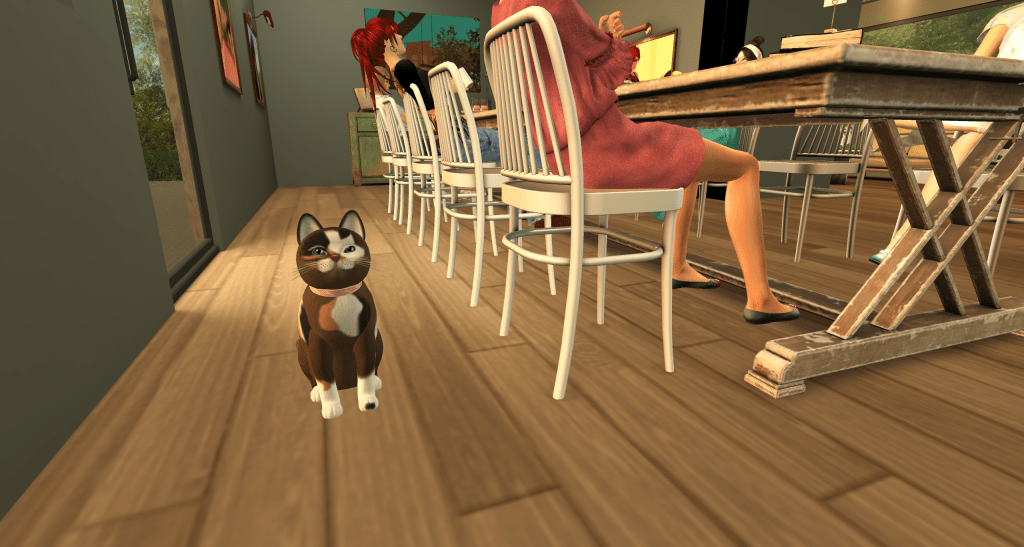
A very special guest joined us for our August meeting…Piki!

Not sure why, but Piki found his furry way into our readers lounge and meandered underfoot while we chatted about our latest reads…

Church of the Old Mermaids by Kim Antieau

This novel is about a woman named Myla Alvarez who lives near the desert in Tucson, Arizona.

Every day she walks out into the desert and picks up whatever miscellaneous items she finds.

Once a week she goes into town and sets up a table outside a book store. She lays out her found items, along with a cigar box labelled “Church of the Old Mermaids – Donations”. When people come along and ask her about an item on the table she gives it to them and tells a story around the item, a story always involving the old mermaids who once lived in the sea that dried up and became the desert. When the sea dried up the old mermaids had to learn to live on the land in the desert. The person then puts a donation in the box and goes off with the item.

She uses the donations to help people she finds lost in the desert, undocumented migrants who have been abandoned by their guides, or simply gotten lost. And of course Myla has her own story.

Bernice loved this intriguing novel and intends to read other titles by this author (who also happens to be an RL librarian!).

A Divine Language by Alec Wilkinson

When Mieke was a grad student, she was asked to make a course by the YWCA for math-phobics. She hadn’t until then realized the depth of panic and fear that some people have over numbers – even to tears and running out of the room. So when she saw A Divine Language in the NY Times, she just had to read it.

The author, Alex Wilkinson, was a total failure in math in high school but squeezed through by cheating, he admits. At the age of 65 he was determined to go back and try to learn algebra, geometry and calculus and the book is about his struggles and what he learns about himself and math in general.

Mieke found the book fascinating and joked that it’s not really as dry as it sounds!

Light a Penny Candle by Maeve Binchy

Binchy’s first novel, Light a Penny Candle is about two ten-year-old girls ~ one English, the other Irish ~ whose mothers knew each other when they were young girls and best friends in school.

The Blitz was starting to go full force in London during World War 2, so Elizabeth White was sent to live with the O’Connors in a tiny town near Dublin where she meets Aisling (pronounced Ashleen). They become best friends over the next five years until the war’s end finds Elizabeth headed home.

The story follows both their lives into their 30s, weaving together a story of strong friendship, their trials and tribulations shared mostly through letters.

Goodreads reviews showed mostly accolades for the book by Binchy fans except for the ending which most people said went too quickly and saw Aisling forsake her deep Irish Catholic roots. FireWoman read the reviews before the book which did not spoil anything for her.

She did see what other readers saw with the ending, but felt that maybe Binchy’s writing was showing how quickly life moves as we get older; finding the 30+ year old women being swept up and into chaotic situations that end with them being together again, still fast friends, nearly alone, ready to face the new days ahead of them.

Black Water by Joyce Carol Oates

A novella based on Senator Ted Kennedy, Mary Jo Kapeckne and Chappaquitick that FireWoman also read in the past month. She felt it was a great short example of Oates’ command of words.

Gray Mountain by John Grisham

A young New York lawyer gets downsized and has trouble finding a job. He ends up in a small town in West Virginia, crusading against mining companies.

Its reader, Veyot, commented that Grisham is quite dependable, if you want a legal mystery with good characters.

Still Life by Louise Penny

Poppy decided to sample Louise Penny’s thriller series featuring the Canadian detective, Armand Gamache, who is sometimes described as the Canadian Hercule Poirot. She finished the first book and started on the second but there she got stuck. Verdict: the jury’s still out.

Bernice read the entire series in order and loved them

Orlando by Virginia Wolff

Poppy also read this novel and thoroughly recommends it.

After Orlando, she read Portrait of a Marriage by Nigel Nicolson, Wolff’s son. Virginia and her husband Harold had an open marriage which lasted a lifetime as they gave each other the freedom to have other partners, usually of the same sex, throughout the 1920s. To say it is unusual for someone to write about their parents’ lesbian and homosexual affairs is putting it mildly but he does so with such delicacy. Virginia was widely considered to be frigid. His mother Vita Sackville West was the subject of Virginia’s hero/heroine Orlando who changed sex throughout the book which spans several centuries. Poppy considered this a far easier read than Orlando.

52 Ways to Walk: The Surprising Science of Walking for Wellness and Joy, One Week at a Time by Annabel Streets

Each chapter of this non-fiction title features a different “walk” – walk to improve your gait…take a foraging walk…walk deep and seek out fractals, etc. Though there’s a chapter on walking with a dog, there’s none on walking with a cat. Zoe is still making her way through it but is enjoying thus far!


A short list of these books may be found here.


Our next gathering will be on Sunday, September 11th at 1pm SLT. All are welcome – bring a friend!