November Reading Notes

Hello, reader…

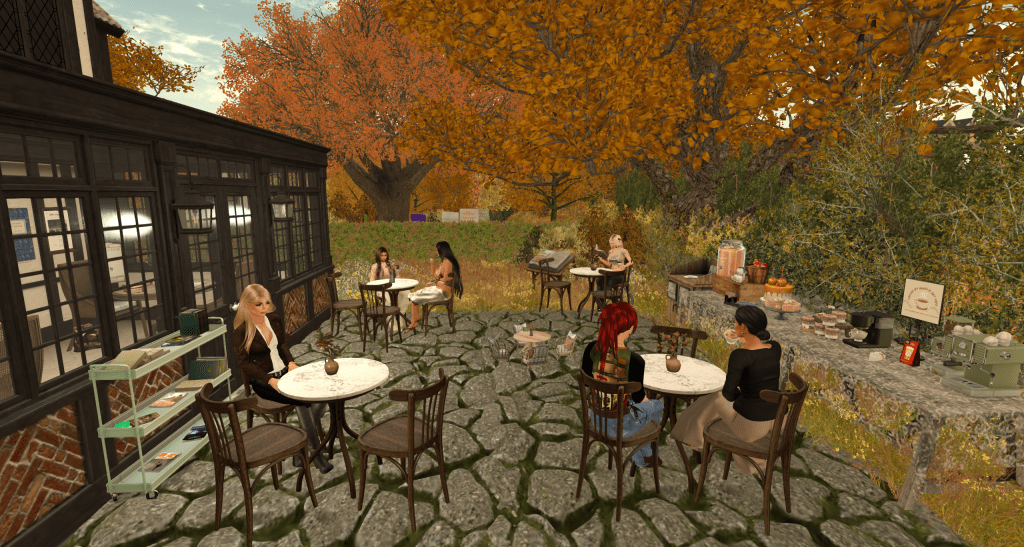
*Note to first time readers: the following is a summary of a discussion by friends who gather monthly in a virtual space called Second Life. Reading notes are lightly edited reflections shared in real time via text chat.


Heart of the Country by Greg Matthews

FireWoman shared that she read a book her mother always said she should read. It was first published in 1986. She was glad her library had an eBook copy because her hardcopy has tiny print.

The novel is told in three parts and follows interconnected characters whose lives weave in and out of one another’s. It is set primarily in 1870s Kansas. At its heart is a half-Indigenous physically deformed whose story unfolds in an epic adventure.

FireWoman said she couldn’t put the book down, praising its strong writing and well-developed character studies. FireWoman reflected that she never got the chance to discuss the book with her mother – she wasn’t ready to read the book till now.

She also noted that Greg Matthews wrote The Further Adventures of Huckleberry Finn, which felt fitting since she had recently read James by Percival Everett.

Small Things Like These by Claire Keegan

Violet shared that her recent book club read Small Things Like These by Claire Keegan, a short novel (under 100 pages) set in 1980s Ireland during the time of the Magdalene Laundries. The story follows a male main character faced with a moral choice: to accept the status quo or to help the young women suffering under the authority of the Church-run institutions.

Violet explained that the book paints a vivid picture of the era when the Roman Catholic Church held deep control over small Irish towns, forcing unwed mothers into unpaid labor in the laundries. Most of the townsfolk were complacent because of the pull of the church.

Although she was initially excited to check it out – it won a book prize and came highly recommended by her club – Violet found it somewhat slow and boring. The author is very descriptive, so much so that she painted a picture of a dreary atmosphere in a way that made one feel as if they were there. She both liked and didn’t like that aspect of Keegan’s storytelling. Still, Violet credited the book for sparking her curiosity to learn more about the Magdalene Laundries, which shockingly operated until 1996.

She also mentioned that the novel was adapted into a film starring Cillian Murphy.

Nuclear War: A Scenario by Annie Jacobsen

Sierra shared her thoughts on Nuclear War: A Scenario by Annie Jacobsen, a nonfiction book that pairs perfectly with Fred Kaplan’s The Bomb: Presidents, Generals, and the Secret History of Nuclear War, which she’s discussed in a previous gathering.

While Kaplan’s work presents a chronological history of how thinking about nuclear weapons and policies developed over time, Jacobsen’s book presents a hypothetical scenario where this all comes into play. She structures the book in terms of time during a hypothetical attack, then highlights the different agencies, people in different roles and what they do. The book is well-sourced; Jacobson based her book on interviews with a number of people and other materials.

The book starts off a little slow but definitely gets more engaging and interesting as things go on. Overall, Sierra is finding it a very interesting read.

She also recommended watching Kathryn Bigelow’s recent Netflix film A House of Dynamite, which echoes similar themes and, together with the two books, forms what Sierra called her own self-assembled course on nuclear history and policy.

The Midnight Library by Matt Haig

KitKat shared that she hasn’t read The Midnight Library yet but recently found it at Barnes & Noble and is excited to start it over the holidays. The book’s premise immediately caught her attention: it follows a woman who dies and finds herself in a mystical library where she can see all the different lives she could have lived based on the choices she didn’t make and even “try out” those alternate paths. She described it as “oddly fascinating” and said she’s eager to see how the concept unfolds.

If Cats Disappeared from the World by Genki Kawamura (translated by Eric Selland)

Zoe shared that she read If Cats Disappeared from the World right before Halloween. Despite its ominous-sounding title, it isn’t a horror novel. The story follows a postman diagnosed with a terminal illness who makes a deal with the devil: for each day he wants to live longer, he must choose one thing to erase from the world forever. Each chapter focuses on one of those choices.

Zoe said the book was lighthearted and fun overall, with a surprisingly chipper devil who wears Hawaiian shirts and seems to be on good terms with God. The ending felt heartwarming and reassuring rather than dark. She admitted to skimming a few chapters and thought the translation might have taken some liberties, since the characters seemed American (the novel was originally written in Japanese and set in Japan).

Zoe doesn’t exactly recommend it but doesn’t not recommend it either. If you see it at the library, give it a look, but definitely don’t buy it.


Happy Holidays, bookworms! See you on January 11 at 1pm SLT for our next gathering.

SLurl to The Reading Room: http://maps.secondlife.com/secondlife/Gundeulbawe/41/164/45
October Reading Notes

Hello, reader…

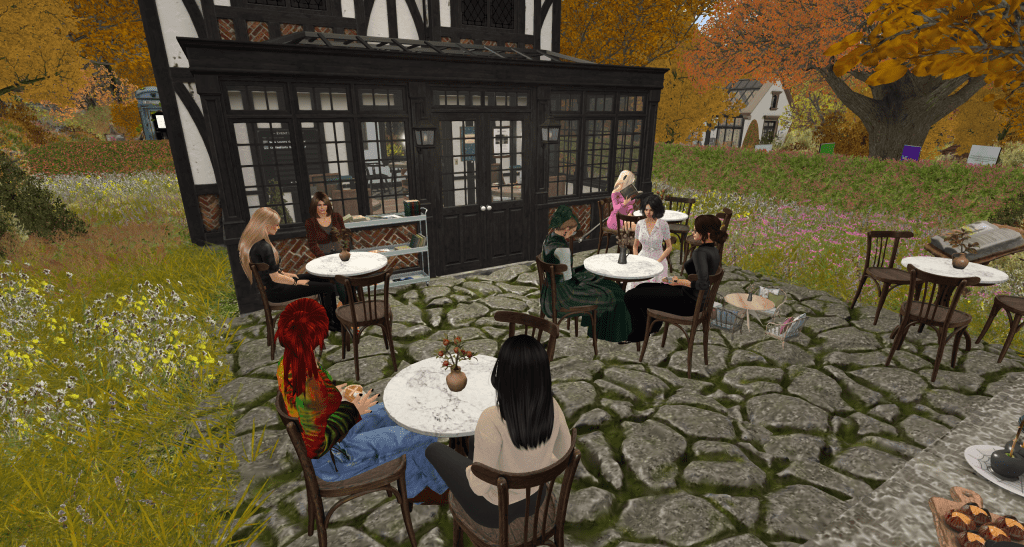
*Note to first time readers: the following is a summary of a discussion by friends who gather monthly in a virtual space called Second Life. Reading notes are lightly edited reflections shared in real time via text chat.


Love Tales of Ancient Japan by Kyoto Ko

FireWoman shared that Kyoto Ko, a Japanese storyteller she follows, has released his fourth book, Love Tales of Ancient Japan. She explained that Ko gathered truly ancient women’s diaries and retold stories from them. In ancient Japan, she noted, poetry was often how people introduced themselves to someone they wanted to know, with poems delivered by a trusted servant of the elite. She described it as “a truly different kind of culture and history.”

James by Percival Everett

FireWoman also mentioned that she finally got her hands on James by Percival Everett. She said, “I could not put James down. The story is riveting and makes me want to reread Huckleberry Finn after decades.” When Zoe asked if readers should read Huckleberry Finn first, FireWoman replied, “I think I would definitely read Huck first.” She added that she’s currently reading banned books, noting that Huckleberry Finn is banned and predicted that James will likely be challenged too, as “the N word is used throughout it.”

The Witching Hour by Anne Rice

Zaida shared that she and Cychwynn are reading The Witching Hour by Anne Rice for another book group. She explained that it’s the book the TV show Mayfair Witches is based on. Zaida admitted that she finds it long and reads slowly, saying she feels like Anne Rice “had two great ideas for a book and mashed them together.” She added that she wishes Rice had written it more like Ken Follett’s Pillars of the Earth series, which spans hundreds of years.

Zaida said they intentionally chose to read it this time of year since she and Noctis built a witch house in New Toulouse modeled after the Mayfair witch house from the TV show. Although she usually doesn’t read horror, she mentioned finding the TV series “a little hard to follow” and expects the book will make more sense after reading it.

The Bomb: Presidents, Generals, and the Secret History of Nuclear War by Fred Kaplan

Sierra shared that she is currently reading The Bomb by Fred Kaplan (not to be confused with Robert Kaplan). She described it as a detailed history of how U.S. strategy and policies around nuclear weapons evolved through different administrations after World War II. She’s about a third of the way through and finds it an interesting and engaging read, noting that she wants to take more notes as she goes.

The book examines how presidents, advisors, and military branches debated the role and use of nuclear weapons, showing tensions between “maximalist” and more incremental strategies. Sierra mentioned that she’s currently reading the section covering the Kennedy and Johnson administrations. She noted the book was published in 2020 and likely includes fairly recent material. She also believes Kaplan is revisiting themes from his earlier work The Wizards of Armageddon (from the 1980s), when much information was still classified. Overall, she finds The Bomb a good, well-paced read that will pair nicely with her other reading on the topic.

Tilt by Emma Pattee

Veyot shared that Tilt is about a woman in Portland who gets caught in an earthquake while inside an IKEA store. The building collapses, and she must walk miles across the city to find her husband.

Future Home of the Living God by Louise Erdrich

This story, also read by Veyot, follows a woman in Minneapolis where it seems the world may be ending. The woman must hide from agencies that are killing mothers and saving babies in an effort to preserve humanity.

Veyot noted that both novels are contemporary and described them as intense and filled with turmoil.

The Hike by Drew Magary

KitKat shared that The Hike was a quick read she absolutely loved. The story begins with a man on a business trip who decides to take a short hike near his hotel before a meeting — but he gets lost, and the journey spirals into a wild mix of adventure, horror, and comedy.

She described it as chaotic but surprisingly well-tied together in the end, with strong fantasy elements reminiscent of Alice in Wonderland. KitKat said there were moments that terrified her like a horror novel and even one point that made her cry. Overall, she found it very well written and thoroughly enjoyable.

Ghosts of Old New Toulouse

Nyx shared this SL Thinc book found in the cemetery at the New Toulouse sim.

The Entirely True Story of the Fantastical Mesmerist Nora Grey by Kathleen Kaufman

Zoe shared that the novel is set in Scotland and America, spanning the years 1866 and 1901. It follows two women who meet for the first time during a séance – with a unique connection initially unknown to them. Both women possess supernatural powers that allow them to communicate with spirits—and even across time with each other.

Zoe noted that each character struggles for independence from those around them. She said the book was “a little slow in parts,” but overall, she really enjoyed it and found it to be a fitting, atmospheric read for autumn.


Our final gathering for the year will be on November 9th at 1pm SLT.

SLurl to The Reading Room: http://maps.secondlife.com/secondlife/Gundeulbawe/41/164/45
September Reading Notes

Hello, reader…

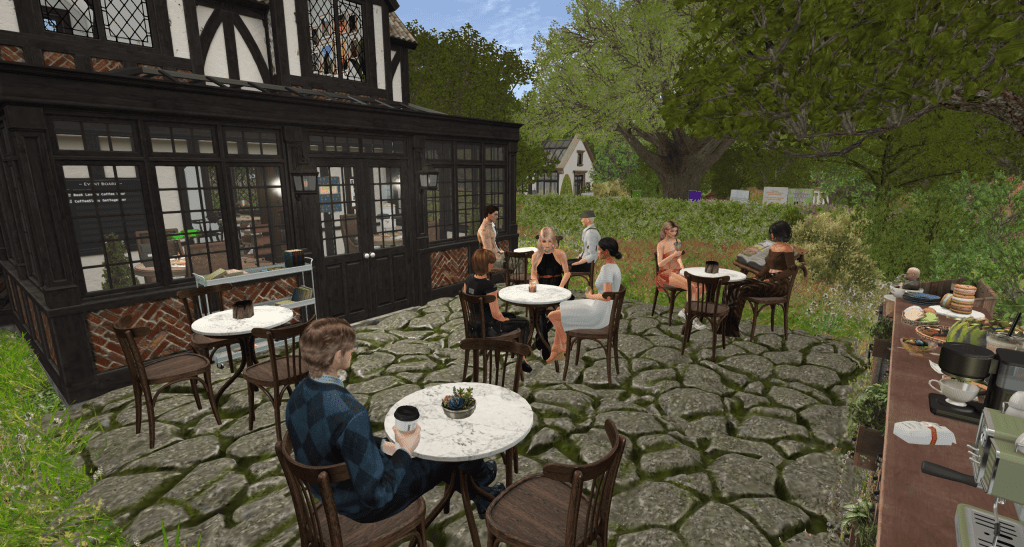
*Note to first time readers: the following is a summary of a discussion by friends who gather monthly in a virtual space called Second Life. Reading notes are lightly edited reflections shared in real time via text chat.


The Gate, the Girl, and the Dragon by Grace Lin.

Lin weaves many Chinese fables and beliefs into her books and her illustrations are phenomenal. The two guardian lions that grace the entrances to many gates in China are a male lion holding a sacred sphere and a female lion with a lion cub in her front paws. These lions live in their own world behind and within the gate and take care of everyone living on the other side. So the reader meets the young lion at the beginning of the book, angry at his father for stopping his game with other spiritual beings living behind the gate. The audience is probably middle schoolers and up because it is so smartly written as to draw in readers of all ages. The story goes between the real living people on the outside of the gate and the spirit beings when the sacred sphere is dislodged and rolls into the living world.

FireWoman thought this was an incredible read.

Where the Mountain Meets the Moon, Starry River of the Sky, and When the Sea Turned to Silver by Grace Lin.

FireWoman Pleiades read these three books after finishing The Gate, the Girl, and the Dragon and said she cried during some of them. She admired how Lin’s illustrations at the beginning of each chapter change with the story. The books are connected through generations of women, and FireWoman mentioned she might reread them to better understand who was who from book to book. In one story, the girl is young, and in another, the old woman appears to be that very same girl.

The House of Dies Drear by Virginia Hamilton.

FireWoman called it a classic in juvenile fiction. The story centers on a house that was used during the Underground Railroad and all its secret hiding places. She mentioned that the sequel, The Mystery of Drear House, is equally enthralling. The book is set in the 1960s, and Dies Drear, in the story, was a white abolitionist who built the house and helped runaway slaves. FireWoman said she had seen this book on library shelves for years and finally decided to find out what it was about. The discovery of the second book came as a surprise, and she shared how much she loved the way Hamilton wrote these stories.

Scattergood by H. M. Bouwman.

Veyot said the story takes place on the prairie in 1941 and reads like an adult novel in its style of writing. It follows two young girls who are friends and talk about the war. Veyot mentioned she hasn’t read very far yet, but somebody gets sick—though she doesn’t yet know who. She discovered the book by looking at its cover and then checking the print inside, which is how she usually decides what to read. She noted that the book is easy on the eyes and has a pretty cover. It was published in 2023.

A Line to Kill by Anthony Horowitz.

Veyot said she always reads at least one mystery and this time chose A Line to Kill. She mentioned that Horowitz also wrote Magpie Murders and Moonflower Murders, which were adapted for PBS Masterpiece Theatre.

In the book, the author himself solves a murder alongside Detective Hawthorne. The story is set on a small British island during a literary festival where all the authors stay in the same hotel and begin to suspect each other of being the killer. Veyot said the reader gets plenty of clues throughout, but the ending is a total surprise. She joked that although it’s set in Britain, she read it with an American accent.

The Book Thief by Markus Zusak.

Stina said she only recently discovered The Book Thief, and it immediately became her favorite book of all time. She described it as having everything—heart, warmth, sorrow, wit, beauty, and death. Stina shared that she’s afraid to watch the movie adaptation, even though she loves the actor in it, because she worries it might replace the vivid world she imagined while reading. She added that the book is very lyrical—so much so that some people even say it’s too lyrical. FireWoman agreed, saying she also hasn’t seen the movie and that the story still calls to her to be read again.

The Correspondent by Virginia Evans

Zoe read The Correspondent, a debut epistolary novel published in 2025. The story follows a woman in her seventies who is a retired lawyer and avid letter writer, and whose correspondence reveals both her quirks and her humanity. At first, the protagonist seems fussy, even “a bit of a Karen,” but as her letters unfold, readers uncover her secrets and the deeper struggles behind her tone.

Sybil, the protagonist, writes to family, friends, famous authors like Ann Patchett and Joan Didion, and even to a customer service representative she once argued with. By the end, Zoe said she cried — it was the best book she’d read all year, touching on themes of aging, self-perception, and empathy.


SLurl to The Reading Room: http://maps.secondlife.com/secondlife/Gundeulbawe/41/164/45
August Reading Notes

Hello, reader…

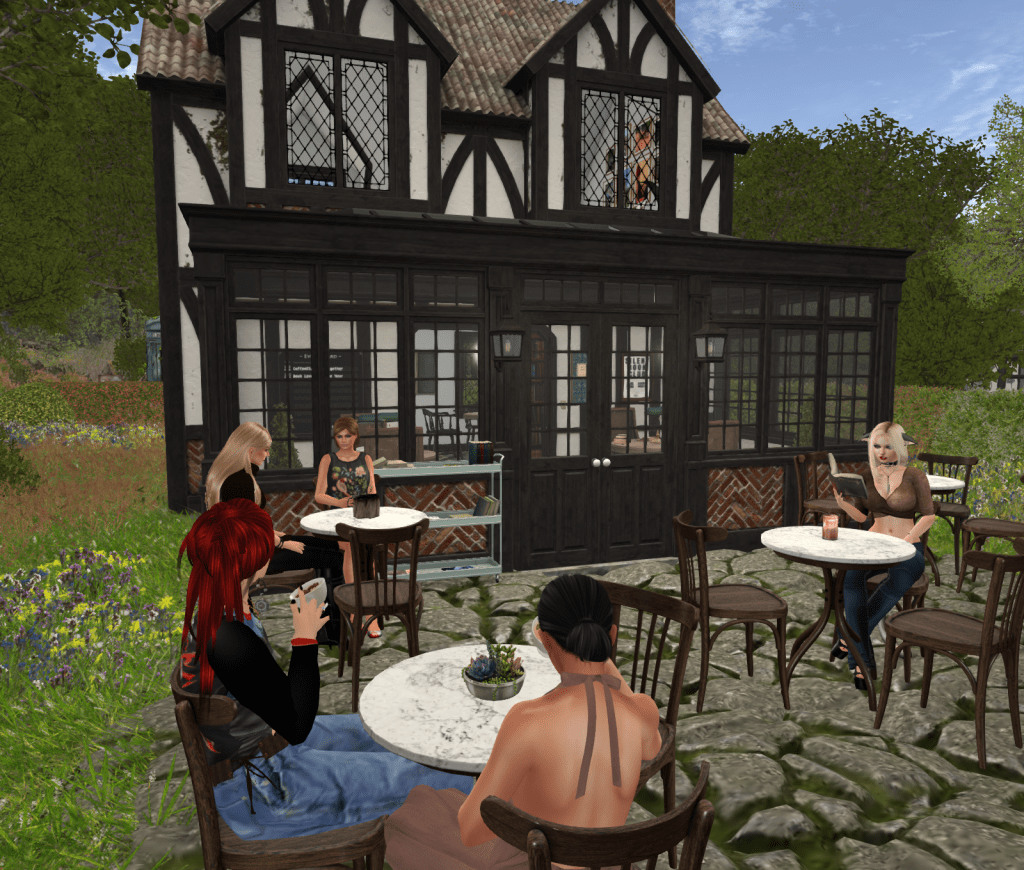
*Note to first time readers: the following is a summary of a discussion by friends who gather monthly in a virtual space called Second Life. Reading notes are lightly edited reflections shared in real time via text chat.


Bomb Shelter: Love, Time, and Other Explosives by Mary Laura Philpott

This book begins with a very dramatic story about her young son’s first epileptic seizure, but continues in a more lighthearted manner. including a tale about the turtle named Frank that lives their backyard. Veyot said that it’s more like a book of essays than one long story. She didn’t like it. Also, as a trigger warning, it involves life during the COVID pandemic.

The Library at Hellebore by Cassandra Khaw

This may be one that Sierra ends up abandoning. She said that this book would kinda fit into that ‘dark academia’ genre.  We can think of it as kind of a cross between Magicians (or later Harry Potter) and Battle Royale.

The premise of the story is that magic is real and while civilization somehow pushed that aside for a long time it made a comeback and when it did these schools arose as places for the magically imbued to go. Some students go there of choice but a lot are basically kidnapped.

At this school they are promised they’ll be educated/trained and be able to enter society and be accepted and all. “Graduation day” is really when the faculty attack the students (which is made clear very early on in the book). The book is violent…in a very supernatural horror way. Though that isn’t the main issue Sierra had.

The story is told kinda jumping back and forth in time…and some authors do that of course…but here one of the problems with that becomes evident –that she felt very lost in what is going on. And had a hard time keeping track of the different characters. The actual writing – the prose – is fine. The issues is in how the story is put together. This is one she doesn’t recommend.

The Last Heir to Blackwood Library by Hester Fox

Set in 1928, this book is about a young Londoner who inherits a Yorkshire estate. She turns up and the estate is beautiful and mysterious. Something seems off though…

As it turns out, she’s also inherited a grand yet haunted library that is literally feeding on her – draining her of her thoughts, memories and feelings to trap them in a book for its shelves.

Zoe loved the premise. The general outline of the plot fascinated her. But the book was written from the protagonist’s point of view – and since the library was stealing her thoughts and memories, she was an unreliable narrator. This made the story difficult for Zoe to follow – though other readers might have a different experience.

Not recommended.

The Specimen by Jaima Fixsen

The story takes place in 1826. A woman’s son is sick with a very specific heart condition, and he goes missing. At the same time, a doctor has a collection he displays for his anatomy classes. A heart that has the same condition is in his collection. It’s about the mother trying to figure out what truly happened to her son. MAC wasn’t quite finished with it yet, but he has been enjoying it. It was a little gruesome with the medical stuff – and he has a feeling it may get a bit more gruesome. MAC recommends it to readers who like a mystery and don’t mind a bit of medical horror.

Strange Pictures by Uketsu

Sofia said that this is a creepy story. The author has apparently started a bit of a new phenomenon in which the reader feels as though they are the detective (though Sofia isn’t sure if it’s really a new phenomenon).

It’s about a guy who starts getting involved with some strange photos that seem to mess with reality. Supposedly, the more he looks into them, the stranger and more unsettling things get, both in the pictures and in his own life.

Sofia is two-thirds through and still not sure what she thinks. It feels like the story is still being set up. She does like the style and feels as though her inner detective is being called on. She will persist to the end. While it is a mystery, she isn’t perturbed or disturbed.


Our next gathering is on September 14 at 1pm SLT.

SLurl to The Reading Room: http://maps.secondlife.com/secondlife/Gundeulbawe/41/164/45
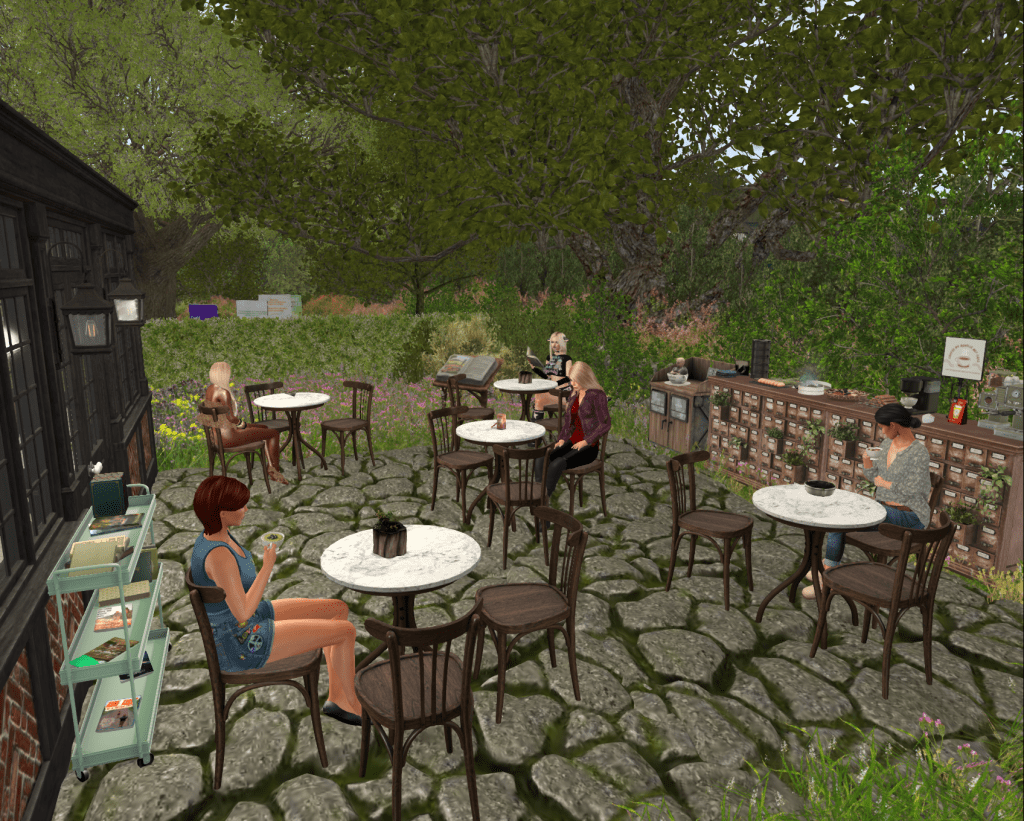
July Reading Notes

Hello, reader…

*Note to first time readers: the following is a summary of a discussion by friends who gather monthly in a virtual space called Second Life. Reading notes are lightly edited reflections shared in real time via text chat.


Braiding Sweetgrass by Robin Wall Kimmerer

A favorite amongst the group, FireWoman is nearly through it. It offers a wonderful approach to knowledge; several places had her highlighting her eBook. She thinks she may buy the hardcopy version. She believes it will make her interactions be more aware in nature. For example, the author’s discernment of how rain has a different sound and that the same water falling can be heavier than other water from the same clouds. Or her descriptions of lichen as visual tours of a dried up plant. Poetry and realization of how we are killing our planet.

FireWoman highly recommends this book.

Awake in the Floating City by Susanna Kwan

A city – San Francisco – is flooded. The ground floors of buildings are unable to be used, so roofs are the landing point, with bridges connecting to other roofs. The main character is an artist who becomes a caregiver for elderly patients in her apartment building. The surprise at the end is the way she uses her art to honor a dying patient. Veyot said that it’s almost like a second life story, because she makes a multi media presentation and shows it on the outside walls.

The Names by Florence Knapp

Veyot also read this one about a demanding husband. He wants his son named Gordon, after him, but his wife and nine year old daughter chat about names on the way to register him. The daughter says she would like to have him named Bear, and the mother says she would choose Julian. Readers do not know which of the three names the mother wrote in the registry. You find out which name she chose on the very last page of the book. But you have three stories going on, about how a different named child turns out. It kept Veyot interested and got wonderful reviews.

The Measure by Nikki Erlick

One day out of the blue, everyone on the planet over the age of 22 gets a box on their doorstep. Inside the box is a string, and this string is the measure of how long your life will be.  It has an inscription on the box, something to the effect of ‘the measure of your life is within’. Some people chose to open the box, some people don’t. The story follows 8 different characters whose stories eventually interconnect, long-string and short-string people. KitKat said that it’s a very interesting read, how it affects relationships between people all the way to society at large.

Calculating God by Robert J. Sawyer

In response to KitKat’s book, Sierra shared this book with a similar theme. It’s about a scientist that has a terminal illness (cancer, as she recalls).  Aliens happen to visit the Earth looking (more or less) for god… which has interesting implications. Most of the book is about the scientist – a paleontologist – character’s interactions with one of the aliens and kinda what he learns.. and how his character develops as a result.

Sierra said that it is a good read. One of the common things about many science fiction novels is that you don’t have a lot of character development.. but in this book there really is some evolution for the main character as he learns more from the aliens and is also confronted with his terminal illness.

Miss Benson’s Beetle: A Novel by Rachel Joyce

Zoe is two-thirds of the way through this book. Set in 1950, it’s about two women who travel to New Caledonia in search of a golden beetle. They are strangers until they meet up for this trip – one hires the other. One’s an extrovert and one is an introvert. It’s a really fun read. Both women have a bit of a mysterious past. I think the author’s thesis is that we don’t need to know everything about a person to consider them a best/close friend.


Our next gathering is on August 10 at 1pm SLT.

SLurl to The Reading Room: http://maps.secondlife.com/secondlife/Gundeulbawe/41/164/45
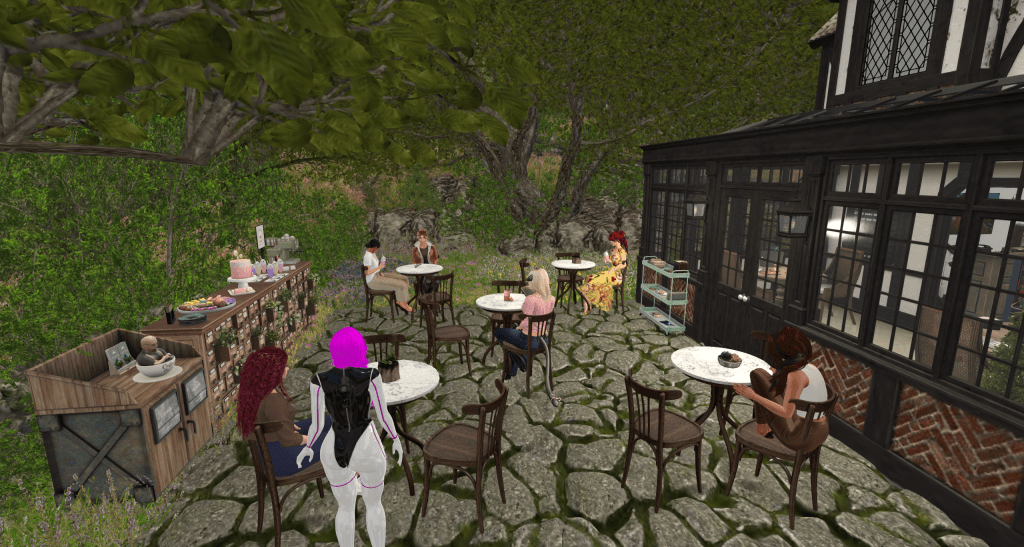
June Reading Notes

Hello, reader…

*Note to first time readers: the following is a summary of a discussion by friends who gather monthly in a virtual space called Second Life. Reading notes are lightly edited reflections shared in real time via text chat.


Somewhere Beyond the Sea – by TJ Klune

This is the sequel to The House on the Cerulean Sea. FireWoman really enjoyed this book. It was different, but Klune said many things that the trans community feels and knows and wishes the cis community would accept about them. Words that needed to be gathered up in one place and read out loud. FireWoman felt that the story was satisfying and thought provoking.

Akin by Emma Donoghue

A retired widower from New York is planning a trip to his childhood home in Nice, France. A social worker contacts him asking for emergency care for a great nephew, age 11, whom he has never met. He doesn’t want to miss the trip so he takes the boy along. It makes for interesting conversations between the two.

A mystery gets involved when he studies old photos of his mother during wartime, because he can’t decide whether she was a French Resistance worker or a German conspirator, but the nephew helps him figure it out!

Veyot said that this book has good characters and good scenery descriptions.

The Decline and Fall of the Human Empire: Why Our Species Is on the Edge of Extinction by Henry Gee

Sierra is nearly done with this book – which she had just started at our last gathering.

The first part of the book is basically a quick history of various branches of humans and how homo sapiens is the last one standing. A lot of this was familiar but along the way he points out things like, humans were actually kinda rare. Hunter-gatherers need a lot of territory to support themselves so the population simply can’t get that big. Until you get to the agricultural revolution which increased the effective carrying capacity of land. Not without its own set of downsides though.

Fast forward a bit to later in the book he also talks about the Green Revolution around the 1960s. That improved a lot of our key crops.  But one of his points is that human population kept growing and we’re now probably maxing those gains out.

The group brought up current population trends. Sierra said that Gee discusses the possible decline around the world in male fertility. Another key part of his argument is that populations are aging and a lot of our advanced tech and know-how is due to having a large populations with smart folks working on stuff. When the population starts declining then sustaining development becomes harder. He’s projecting out a ways but it is an interesting ( I would call it fun ) thing to speculate that humans might go extinct 🙂

Gee then gets to the last point which is that if humans can expand into space then that may provide benefits to avoid such extinction.

Overall, Sierra felt this was an interesting read. It’s a book that could be combined with a few others to make a more interesting survey.

Smothermoss by Alisa Alering

This is about two sisters living 1980s Appalachia. Both very different but both struggling with poverty and those pesky teen hormones. The oldest sister is left to run the house while their mother works at the nearby asylum. So she is more than resentful while also dealing with some paranormal occurrences. Dani said that it is beautifully written and haunting. The end left her wanting more.

Are you There God, It’s Me, Margaret by Judy Blume

This was a re-read for Emm. She couldn’t remember how old she was when she first read it, but discovered that she still enjoyed it.

My Friends by Frederik Backman

This is a book that Emm felt she had to sit with when she was done. It’s about how art touches the soul and has the power to heal and transform, even when we don’t know it.

The Unlikely Pilgrimage of Harold Fry by Rachel Joyce

This is a book about a man, Harold, who receives a letter from someone in his past. He writes a short letter in response and walks to their nearest post to mail it – but then somehow ends up walking across England to deliver his message in-person. The friend he is delivering it to has cancer and Harold is convinced that he can save his friend with this walk. Zoe is only a few chapters in but is highly enjoying it.

The Tokyo Suite by Giovana Madalosso

This book has nothing to do with Japan. It’s by a Brazilian author and is set in San Paulo. It’s the story of two women – a television producer and her nanny. The nanny kidnaps the producer’s young daughter. But, Zoe said that the book is more about how these two women are exploring their interior lives…and somehow find themselves doing things that are completely unlike their typical behavior.

It was short. And witty. Zoe bought it because it was slim and fit nicely in her purse (she was traveling when she bought it). She also liked the cover. She was glad it turned out to be a good read.

The Names by Florence Knapp

Veyot brought this one up but didn’t go into detail because it was already on Emm’s list. We might discuss it next time!


Our next gathering is on July 13 at 1pm SLT.

SLurl to The Reading Room: http://maps.secondlife.com/secondlife/Gundeulbawe/41/164/45
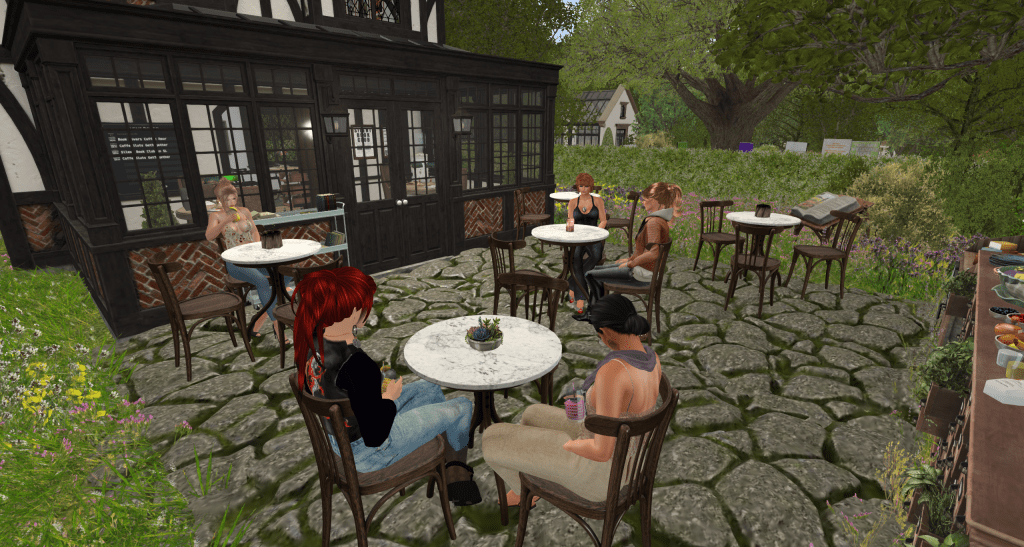
May Reading Notes

Hello, reader…

*Note to first time readers: the following is a summary of a discussion by friends who gather monthly in a virtual space called Second Life. Reading notes are lightly edited reflections shared in real time via text chat.


Mornings on Horseback – by David McCullough

FireWoman shared that this is an easily readable and extremely well researched biography on the life of Theodore Roosevelt from a 10-years old sickly child to owning a ranch in The Badlands of the Dakotas to the time of his coming into his own as the world would come to know him.

Three Souls by Janie Chang

 A most excellently written book set in the 1920s-1930s China. The story unfolds as the ghost of Leiyin watches her own funeral with her three souls looking on as well. Leiyin has to figure out why she and her souls didn’t move into the afterlife. FireWoman had this book in her ‘to read’ pile either from one of our coffee hour group telling us about it, or she heard her interviewed on NPR.

The Decline and Fall of the Human Empire by Henry Gee

Sierra picked this up in one of her local bookstores because it looked really intriguing. Henry Gee is an editor at Nature and also wrote A (Very) Short History of Life on Earth. What Gee does in Decline and Fall is a short telling human history inclusive of various hominid cousins. His argument – and she’s only partway into the book so she hasn’t gotten to the meat of this really – is that the human species is doomed to extinction. Well, maybe not doomed…there may be some ways out.

Gee writes well…with wit and fun footnotes. Sierra is finding all sorts of cool little observations that she feels like she wants to highlight. It’s a fun read.

All Systems Red by Martha Wells

Sierra is also rereading the Murderbot Diaries series since it just started on AppleTV. The character SecUnit is one of the most endearing fictional characters she’s read in a long time.

Cat’s People by Tanya Guerrero

A young girl feeds stray cats. A young man sees her and leaves notes thanking her. And 3 other people are brought into the story too, because of the cat. The cat’s thoughts are part of the story. Veyot said that everything turns out happy in this book – especially good if you’re going through a tough time.

The Underground Railroad by Colson Whitehead

Veyot also read this book about slaves escaping from cruel masters. She had tried it once before but quit when she found out that the railroad in the book was not historically accurate, because it was really underground. But then based on the group’s conversation about magical realism, she gave it another try.

The main character is young Cora, whose mother abandoned her when she escaped from the plantation. Cora plans her own escape and keeps traveling on the underground railroad to three different states, hiding from the slave trackers who are hunting for her. There is absolutely no magic in the cruel way the slaves are treated in the book, and the underground railroad part could have used more magical drama. But it was interesting, and she recommends it.

Swordheart by T. Kingfisher

A widow lives with her deceased husbands very wealthy but eccentric great-uncle and she takes care of him. The book begins when he passes, and leaves her everything.

Which, his family is SUPER pissed about, so they lock her in a room and try to get her to marry one of them, so they can essentially steal the fortune. She finds a sword on the wall while trying to, erm… ‘escape’, deciding death is preferable to another marriage. Well, when she pulls the sword, a man appears in her room and he’s the spirit of the sword, sworn to protect whoever draws him.
 It’s quite a bit of humor, with some romance thrown in. He’s centuries old, but only exists when the sword is drawn and if he’s killed in battle, he returns to the sword to heal before he can be drawn again. So he’s basically cursed. Well, cursed and immortal. And she’s a sassy, mid-30’s widow who’s had it with people overlooking her.
KitKat thought that this was a super adorable fantasy read overall.

Things Become Other Things by Craig Mod

A memoir about the author’s 300-mile walk through ancient Japanese pilgrimage routes. He’s originally from Connecticut – an impoverished area. And he moved to Jpaan to become a “new person”. Shed his old skin, sort of thing.

But, through this walk, he ended up seeing his childhood and some of his trauma through new eyes. And felt that by running away, he realized that you can never truly run away from yourself.

Many of the towns that he walked through were also impoverished. So it was interesting to read his translations of conversations that seemed different from what we typically see of Japanese conversations in the media?

The book is also a kind of letter to a childhood friend who never “got out” and died in his twenties. Zoe really enjoyed this book.


Our next gathering is on June 8 at 1pm SLT.

SLurl to The Reading Room: http://maps.secondlife.com/secondlife/Gundeulbawe/41/164/45

April Reading Notes

Hello, reader…

*Note to first time readers: the following is a summary of a discussion by friends who gather monthly in a virtual space called Second Life. Reading notes are lightly edited reflections shared in real time via text chat.


Everflame Series – by Penn Cole

Jamie just started book 3 of this romance/fantasy series. Book 4 gets released this summer. She said that it’s book good so far. Mortals vs Descends, magic system. She also said that it isn’t too spicy (wink, wink!).

The Which Way Tree by Elizabeth Crook

Authored by a Texan, this book is set after the American Civil War in the Hill Country of Texas. FireWoman said that she’s never read a book like it, the way it was delivered. The story is told by the young teenaged boy beginning with his testimony in court about what happened. The rest of the book are written letters to the circuit judge, thereby the story unfolds.

The Which Way Tree was Texas’ choice for the National Center for the Book last year. FireWoman said that the whole story is incredible and based on the author’s own son’s brush with a man-killing mountain lion in the Texas Hill country. The author’s grandfather was Howard E. Butts: the founder of HEB Supermarkets in Texas. The author’s notes in the back of the book are a good read in themselves. Warmth and humor are throughout the book. Also, there will be a sequel!

Charley Davidson Series by Darynda Jones

XSU 80-9275 recommends this paranormal mystery. The main character is the grim reaper but doesn’t quite get it. Xsu commented that there are a lot of funny scenes! Witty but still coherent and a lot of great world building – so you feel like you’re there, with the character. Xsu read this as a audiobook and said that the narrator is great too.

This is How You Lose the Time War by Amal El-Mohtar and Max Gladstone

Sierra read this kind of spy-vs-spy story between two agents in a temporal war. The agents are known only as ‘Red’ and ‘Blue’. They represent two ideologically different sides in this conflict. They start exchanging notes with each other and that alone gets interestingly complex too. But that’s how their relationship develops. Since this is a time war, there is an aspect that might drive some readers nuts – a bit like the movie ‘Tenet’ by Christopher Nolan. Sierra said it was a fun read.

The King in Yellow by Robert W. Chambers

Violet loves Lovecraftian horror and said that this book genuinely impressed her. The way he writes, like, style and vocabulary were very enjoyable… the language maybe resembled something 19th century, maybe closer to Edgar Poe than Lovecraft, but she found the stories really interesting. It very much read like a Lovecraftian horror, written before Lovecraft…and, in her opinion, in a more interesting style. Violet’s friend told her that Chambers was one of the first writers to use the unreliable narrator trope in fiction.

The Bacchae by Euripides

Violet also recently read this and said that what she finds interesting is that they do not really read that old. Like if it was published today, Euripides would be considered too woke and political probably. She also said that it is best read together with the footnotes – and that the reader will need to read the context really carefully.

Lazarus by Richard Price

A Harlem tenement collapses, killing some residents and displacing the rest. It’s based on a tenement collapse in 2014, near the author’s home in Harlem. The author writes good conversations which makes the reading go fast. The main characters are a policewoman looking for missing people, an amateur film maker, a funeral director, and the Lazarus Man, who was buried under the rubble for three days.


Our next gathering is on May 18 at 1pm SLT. Regulars, please note that this is the 3rd Sunday of the month.

SLurl to The Reading Room: http://maps.secondlife.com/secondlife/Gundeulbawe/41/164/45

March Reading Notes

Hello, reader…

*Note to first time readers: the following is a summary of a discussion by friends who gather monthly in a virtual space called Second Life. Reading notes are lightly edited reflections shared in real time via text chat.


Prison Writings: My Life is My Sundance – by Leonard Peltier

FireWoman started this before the author’s clemency was granted and finished it recently. Peltier has been a political prisoner for 49 years for a crime he did not commit.

The FBI and other law enforcement was systematically killing American Indians on the reservations in the early 1970s. Two FBI agents were killed in a massive shoot out. It was the beginning of AIM: American Indian Movement. Peltier is Sioux Indian.

Peltier’s book completely dispels how the trials were handled. All of the evidence was concocted by the FBI. Ramsey Clark was Lyndon Johnson’s attorney general. He was Leonard’s defense lawyer.

Sipsworth by Simon Van Booy

Veyot read this sweet novel about a lonely retired lady who makes friends with a mouse. It’s not a children’s story book, but it’s told with love and respect for the lady. Van Booy also writes philosophy books. There is a clever twist in the book where a doctor gets involved in treating the mouse – the doctor is not a vet, but an MD.

Three Days in June by Ann Tyler

Veyot commented that this is almost like a short story. It’s about a divorced husband and wife who deal with problems in the days before their daughter gets married. Veyot said it would make a good book for night reading as it’s funnier than sad.

Hang the Moon by Jeannette Walls

Veyot also read this book, which was recommended by her local library. The main character is a teen age girl in the 1920’s who runs errands and collects rent money for her father who owns most of the town, including the whiskey business. When liquor is declared illegal in the US, she becomes a successful bootlegger. Characters pop in and out of the story rapidly so much that you can’t remember them all. Veyot thinks that it will surely become a movie.

The Norths Meet Murder by Frances and Richard Lockridge

Petronella read this novel that was recently reissued by the Mysterious Bookshop. She remembered reading and liking the series about 30 years ago when she lived in the same neighborhood as the Mysterious Bookshop, which mostly stocked old, second-hand, out-of-print books. She didn’t love reading this one a second time around however, it’s a cute couples mystery like The Thin Man series – so others may enjoy it.

The Notebook: A History of Thinking on Paper by Roland Allen

Sierra recently started reading this history of the notebook, which Zoe recommended at a previous gathering. So far, she appreciates the book. Each chapter covers a different topic and the continuity is about writing and notebooks and paper. Along the way, it touches on a lot of different topics in history–the invention of double-entry book-keeping, artists notebooks, and that very recent (comparatively) innovation of bullet journaling. Sierra is interested in how other people use their notebooks. Like the eyes are the windows to the soul, the notebook is the window to the mind!

The School of Magical Animals (Die Schule der Magischen Tiere) by Margit Auer

sútha and her little one are reading this series about a group of school children who receive special talking animal companions that help them navigate everyday challenges and adventures. The stories combine friendship, mystery, and magic, making them engaging for young and older readers alike.

How to Age Disgracefully by Clare Pooley

Zoe read this book about a handful of lonely people who find their way to each other via a local community center and become great friends. It made Zoe cackle out loud. Highly recommended!

In the Buddha’s Words: An Anthology of Discourses from the Pali Canon by Bhikkhu Bodhi

sútha is also reading this book and recommends it.


Our next gathering is on April 13 at 1pm SLT.

SLurl to The Reading Room: http://maps.secondlife.com/secondlife/Gundeulbawe/41/164/45

February Reading Notes

Hello, reader…

*Note to first time readers: the following is a summary of a discussion by friends who gather monthly in a virtual space called Second Life. Reading notes are lightly edited reflections shared in real time via text chat.


The Vanishing Tower (The Elric Saga #6) – by Michael Moorcock

Babycham enjoyed the Elric Series by this author, but especially The Vanishing Tower.

The Life of Herod the Great by Zora Neale Hurston

FireWoman finished this novel that she mentioned last month. Through Neale Hurston’s extensive research, it was discovered that the slaughter of innocents did not take place. FireWoman recommends reading the book for details and thinks that it will probably become a banned book very quickly as it dispels everything in the Christian religion.

The House in the Cerulean Sea by TJ Klune

FireWoman also read this wonderful book about magical children. She said that it was written extremely well and reveals tenderness, compassion and demystifies prejudices if the reader will allow it.

*The sequel to The House in the Cerulean Sea as well as Under the Whispering Door, both by TJ Klune, were also mentioned and recommended.

In the Garden of the Beasts by Erik Larson

Veyot read this book about an American ambassador to Germany in the years 1933-37. She learned a lot about the problems he faced and about the love life of his 24-year old daughter when she dated lots of Hitler’s supporters – including the head of the Gestapo. He had trouble with his staff because there were both Jewish and Hitler supporters on his staff. And Congress and the American people didn’t believe that Hitler would be a threat.

When asked about wisdom from the book, Veyot said that it might mean to speak out for world peace.

Great Expectations by Charles Dickens

Laura mentioned that this is her favorite book. She’s also reading something by Russell Brand and said that it’s funny.

James by Percival Everett

Petronella read this new version of Huckleberry Finn, told from the perspective of Jim, the slave, who takes a raft up the Mississippi with Huck. She said that while Twain’s book is funnier, the Everett book has some very important points to make.

*Petronella also recommends the audio version of Twain’s Huckleberry Finn

Northbridge Rectory by Angela Thirkell

Petronella also read this novel which is set during WWII in Barsetshire, a fictional village. It’s funny and also an interesting study of how people behave during wartime. Thirkell’s style is somewhat like PG Wodehouse and EF Benson; her novels remind Petronella of Benson’s Lucia books. Though where Benson’s characters breathe rather rarefied air, Thirkell’s are down to earth and very funny.

Scholomance Trilogy by Naomi Novik

Iskrin raced through this series which starts with A Deadly Education. It’s about kids in a magical school…but the school is brutal and they have to do chores to build mana so that they can cast spells to protect themselves from the creatures who break into the school to snack on them.

The whole series is a wonderful commentary on all kinds of societal ills, but mostly on the impact of privilege and what those with it will do to maintain it, and how those without it get treated as lesser-than. Also strong themes of how people who are different get treated as dangerous or untrustworthy.

Iskrin went into it thinking ‘oh no, not another Harry Potter clone’, and honestly, he was overjoyed to find that it couldn’t be more different! It’d been a long time since a fantasy novel surprised him on the mechanics of its world.

Fire and Blood by George R.R. Martin

After falling into Game of Thrones RP in SL, Georgina recently picked up this book – though she’s not very far along in it. It exists outside the main series and is about the original conquest. She’ll report back once she’s read more!

Architectural Digest

Not a book, but Valentina mentioned enjoying this magazine.

*Zoe enthusiastically encourages and celebrates all forms of reading – magazines, zines, newsletters, manga etc.

Sunrise on the Reaping by Suzanne Collins

Laurel is reading an advanced copy of this novel. She said that if you like YA and enjoyed The Hunger Games, then she recommends this 10/10.

Cher: The Memoir, Part One by Cher

After Zoe mentioned loving memoirs, Georgina mentioned this one.

Be Ready When the Luck Happens by Ina Garten

Zoe mentioned this memoir, too.

Moab is My Washpot | The Fry Chronicles | More Fool Me by Stephen Fry

Iskrin mentioned that Fry’s memoirs are excellent.

The Woman in Me by Britney Spears

Zoe read this memoir last year. She liked it more than she thought she would – and felt bad for Britney.

Alias Grace by Margaret Atwood

Laurel mentioned this an as ‘oldie but goody’ historical fiction novel.

I’m Glad My Mom Died by Jeanette McCurdy

Georgina listened to this audiobook and said it was fabulous.

The Great Gatsby by F. Scott Fitzgerald

Georgina tried to reread this novel this past summer and couldn’t get into it…but then tried the audiobook and was immediately transported. She enjoyed it!

(Many folks agreed that they loved Gatsby, too).

Z: A Novel of Zelda Fitzgerald by Therese Anne Fowler

A fictional account of Zelda Fitzgerald that Georgina enjoyed – though she did wonder how much of it was overkill.

How to be Old: Lessons in Living Boldly from the Accidental Icon by Lyn Slater

Zoe read this memoir by a septuagenarian who became a fashion influencer in her 60s. Zoe found her story fascinating – though the writing itself was rather prosaic.

Zelda Fitzgerald: Her Voice in Paradise by Sally Cline

FireWoman highly recommends this book from 2012 for readers interested in learning more biographical information about Zelda.


Our next gathering is March 9 at 1pm SLT.

SLurl to The Reading Room: http://maps.secondlife.com/secondlife/Gundeulbawe/41/164/45